


.svg)


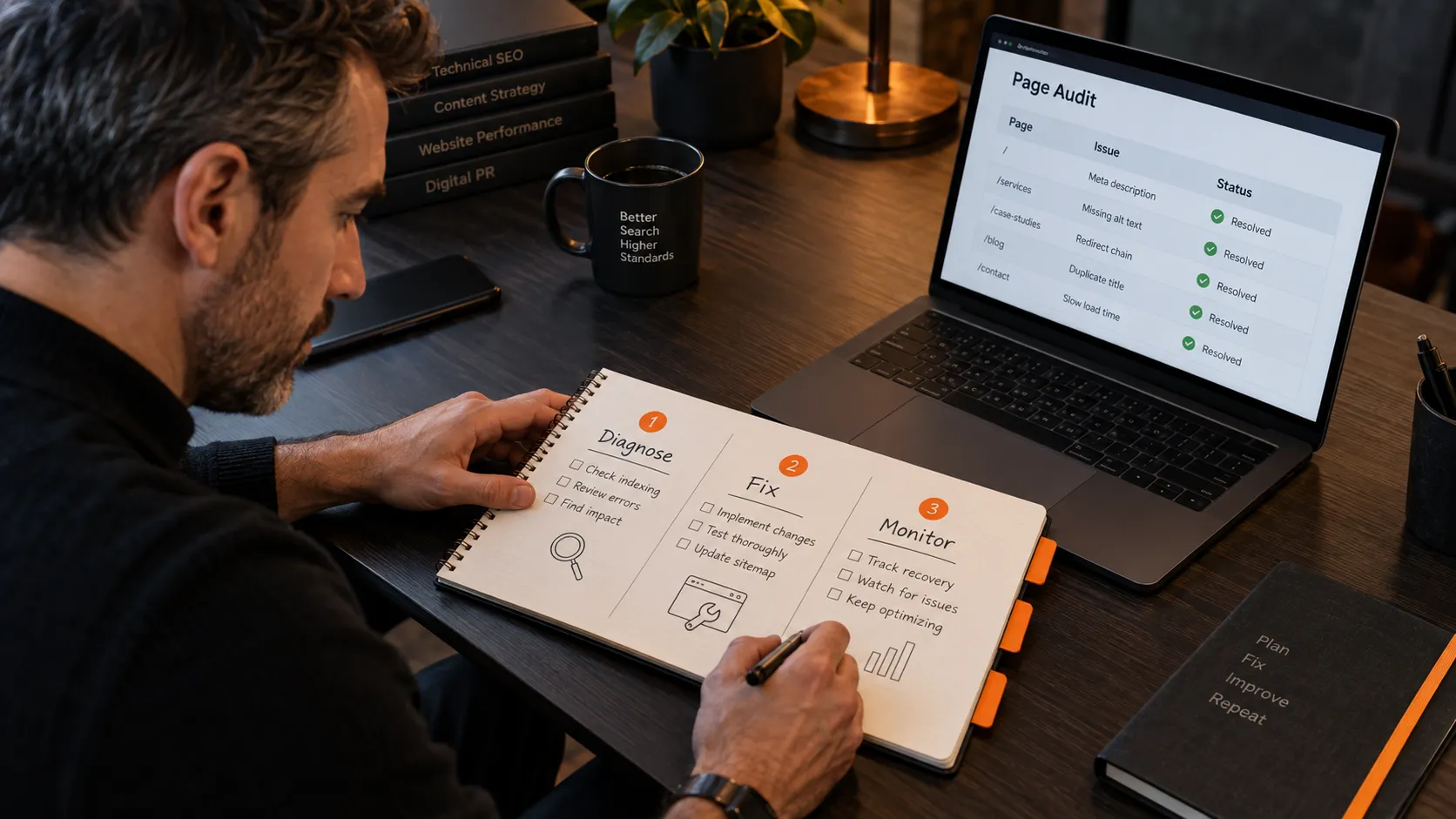




The steady stream of orders suddenly dries up, and website traffic drops to almost zero. There are no warnings or manual-action notifications in Google Search Console, but buyers are no longer finding your site. This is what many site owners refer to as a Google shadow ban, when the site may still be indexed, but its visibility in search results drops so dramatically that potential customers can barely find it through organic search.
When organic traffic disappears for no apparent reason, the business loses profits instantly. It is natural for people to look for quick answers, but rash decisions are only harmful here. Potential customers can quickly turn to competitors, so it is important to calmly understand the mechanisms behind these restrictions, identify the problem, and take safe steps to recover organic traffic.
What Is a Google Shadow Ban and How It Impacts Your Business
In SEO, the term hidden ban describes a situation in which a website loses search visibility without being completely removed from Google’s index. Unlike complete blocking, when pages disappear from Google’s index altogether, in this case, your pages may rank much lower for important queries. Formally, the site exists, but its organic visibility can fall dramatically.
Financial consequences of such a situation are felt almost immediately. The owner may have to shift more of the budget to paid search or other advertising channels because the usual flow of buyers has stopped. At the same time, the cost of attracting each client from paid search or paid social can increase significantly. Meanwhile, competitors may begin taking over the search positions you previously held.
Falling graphs are usually accompanied by a sharp drop in impressions and rankings. The decline may be linked to technical issues, content quality, spam-policy violations, or changes in Google’s ranking systems. When rankings and impressions fall sharply, it is important not to take chaotic actions, but to immediately conduct a systematic analysis of the entire site.
Recognizing the Red Flags of a Shadow Ban in Google
A systematic review of key metrics will help reveal hidden limitations. One of the best places to start is Google Search Console, where unusual changes in performance are clearly visible.

Here are the main warning signs that indicate problems:
- A sudden organic traffic drop that is in no way related to seasonality or changes in market demand.
- Persistent indexing issues, when new products or articles remain unindexed for weeks.
- The appearance of de-indexed pages, when previously indexed category pages disappear from Google’s index.
- A manual action reported in Google Search Console.
- A clear coincidence between the decrease in indicators and the timing of a Google ranking update.
- Constant crawl issues that prevent Googlebot from accessing important pages.
If you notice several such signals at once, this warrants a deeper investigation. The situation requires careful work with each element of the site. The presence of these symptoms may indicate that the site has lost search visibility because of quality, technical, or policy-related issues, and a consistent recovery plan will be required.
Common Causes Behind a Suspected Google Shadow Ban
The causes of such problems almost always lie in non-compliance with quality standards or in attempts to quickly bypass competitors using manipulative SEO tactics. Search algorithms are constantly being improved, so manipulative techniques sooner or later can lead to strict limitations.
One major risk is violating Google’s spam policies. Violation of these norms often occurs due to the use of spammy, artificial, or manipulative backlinks or large-scale link buying and participation in link schemes. Google’s systems may detect artificial link-building patterns intended to manipulate rankings and take action against the site.
Another common factor is the presence of thin content. When hundreds of almost empty pages with no unique value for the reader are created on the site, overall search visibility may suffer. This includes attempts to use black-hat SEO, hidden text and redirects to mislead users, as well as keyword stuffing, where the same phrases are repeated unnaturally throughout the copy. If an unnatural-links manual action appears in Google Search Console, this directly indicates the need to urgently clean the link profile.
Hidden Risks of DIY Fixes During an Organic Traffic Drop
The desire to eliminate the problem yourself is quite understandable, because every day of reduced organic visibility can cost the business revenue. However, trying to fix the situation blindly often only makes the situation worse. Site owners may start deleting entire sections in bulk, change page addresses or buy new links, hoping to reverse the decline.
In fact, the risks of DIY fixes are that without a deep understanding of the causes, you may end up treating the symptoms rather than the underlying cause. Reckless steps can ultimately make it harder for Googlebot to crawl and understand the site or destroy the remnants of a well-organized site structure. Instead of randomly deleting content, you should first conduct a deep content audit to clearly distinguish useful pages from duplicates and unimportant material.
In parallel, it is critical to have a professional technical SEO site audit performed to detect hidden technical errors, duplicate content, loading speed issues, and crawl failures. Only a detailed diagnosis will show the real picture and make it possible to develop a safe recovery strategy.
A Step-by-Step Penalty Recovery Process to Reclaim Your Traffic
Recovering from a ranking or visibility loss requires calmness, a systematic approach and balanced decisions. A step-by-step plan for exiting the crisis allows you to gradually address the underlying issues and rebuild search visibility over time.
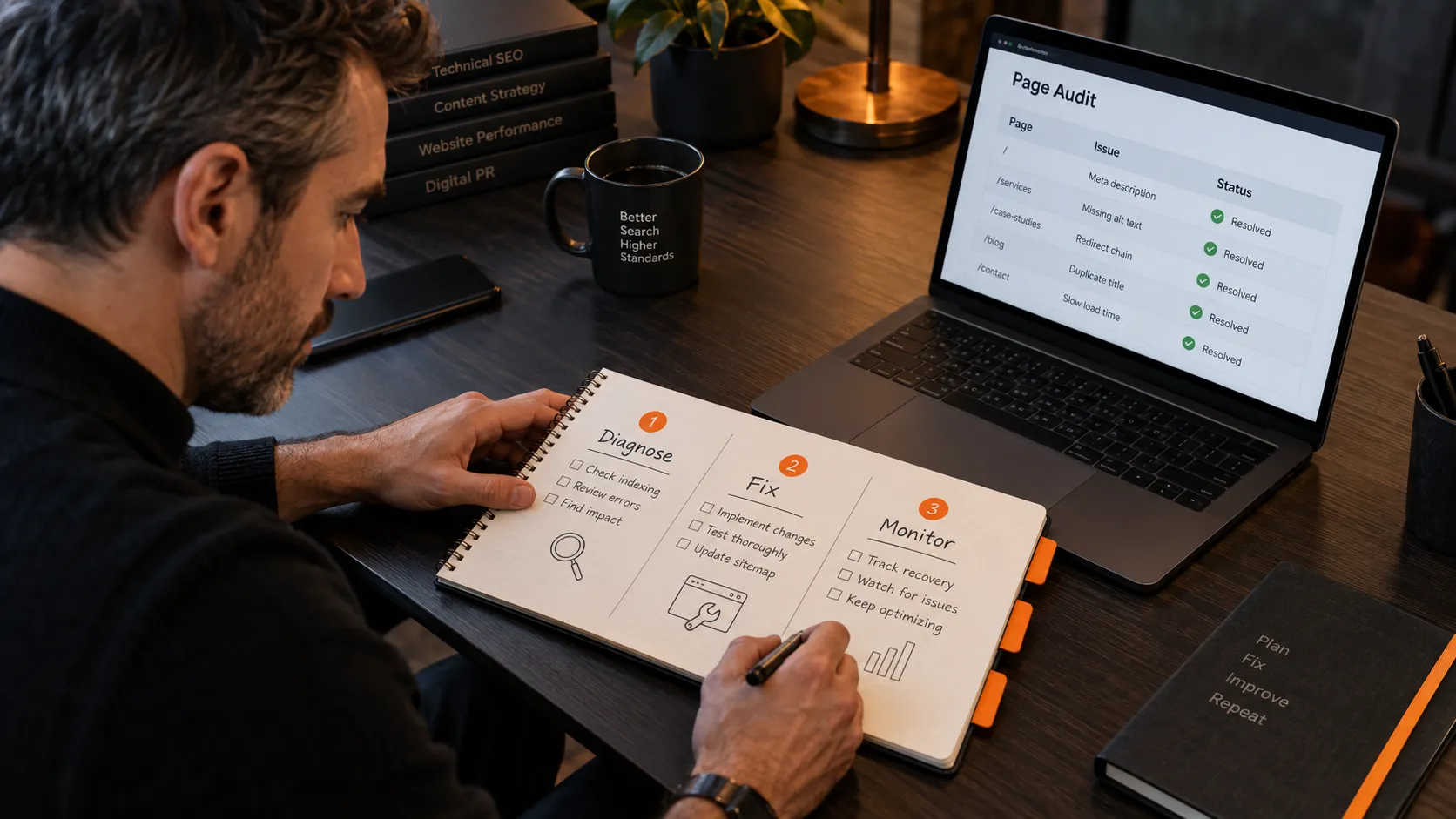
Here are the basic steps to correct the situation:
- Full diagnosis of the technical condition of the site and evaluation of the content of the pages.
- Review potentially manipulative backlinks and use Google’s Disavow Tool only when appropriate.
- Improve low-quality content, remove keyword stuffing, consolidate duplicates, and fix improper redirects.
- Fix technical issues, improve site speed, and make the site easier for Googlebot to crawl.
- Submit a reconsideration request if Google Search Console shows a manual action and the underlying issues have been fixed.
- Gradual safe traffic recovery with constant monitoring of rankings, impressions, clicks, and organic traffic.
It is necessary to understand that traffic recovery does not happen in one day. Algorithms need time to rescan all pages and ensure their quality. Following a systematic recovery process improves the chances of restoring visibility while reducing the risk of further problems.
Why Partnering with Ecommerce SEO Providers and SEO Recovery Experts Matters
For an established ecommerce business with a large product catalog, every mistake during the recovery process can lead to serious losses. Independent testing of hypotheses takes too much time, which entrepreneurs simply do not have. Qualified SEO recovery experts understand how search updates can affect visibility and know how to interpret Search Console data and follow Google’s recovery procedures.
Cooperation with a professional team makes it possible to use proven methods and avoid typical pitfalls. The involvement of experienced specialists, such as ecommerce SEO providers, provides a comprehensive approach to the recovery of sales and the creation of a reliable foundation for further growth.
A reliable professional SEO agency always focuses on long-term results, concentrating on the real income of the company rather than vanity metrics. Thanks to this, your site can help recover lost organic visibility and attract potential customers again, while becoming better prepared for future search algorithm changes.




.svg)